
The Celtic “Otherworld”

The Idea of an “Otherworld” is something that occurs within Paganism all throughout Europe. For the Greeks, Mount Olympus is an example of an otherworld where the gods reside. The realm of Hades is also another aspect of the Otherworld to the Greeks. For the Norse, these examples would be Valhalla With Hel being the equivalent as the realm of Hades. For the Celts, the idea of the Otherworld was the realm of the “unseen” which, in my opinion, I think it means that it does not exist in the same reality in which we do. Instead, it is where the dead and the gods reside, and it is separate from our current realm of being. This realm is heavily associated with the god Dagda where he uses his club to rejuvenate life back to our world through reincarnation and judges souls. It is important to remember that this otherworld is not separate from ours and it does have massive causes and effects to us. A better way to describe it would be “a world beyond our senses”. The ancient Celts would use the analogy “existing beyond the veil” as if our comprehension was blinded since we are only humans. They believed this other reality was simply beyond our current understanding. Things such as fairies and even the gods are invisible to us because they move beyond the veil; however, they are ever present and always watching. Just because their actions are not immediately evident to us does not mean they don’t affect us. Try to think back to your younger years or even now, have you ever felt things that you couldn’t explain or done things that you knew you’d regret later but you did them anyway? If you have any experience with mental health, you may have had panic attacks for “no reason” or seem stuck on an event that happened “so long ago”. These would be examples of the fairies or spirits interacting with you and influencing you, at least in a Druidic sense. Some would argue that this idea is ignorant of modern medicine and that to view the world through this perspective is too primitive. To them I ask, how different is talk therapy from confession? How many ancient myths involve a young hero out to destroy a demonic presence but must first ask for help from an older “wiser” figure to guide on improving their skills and their mental state or morality? Seeking moral guidance from a Druid is not that much different than seeking moral guidance from what modern people call a medical professional. The actions are nearly identical since ancient heroes wouldn’t seek out help if they were acting in accordance with their morals. The same applies if you aren’t feeling anxious or depressed. The qualifications of the modern day professional represent the only difference between the two examples. While the Druid went to school to learn the ways of the gods a.k.a morality, the therapist also went to school to understand human actions which is also the study of morality. The same skeptics might also bring up the benefits of medicine. At least 25% of modern western medicine comes from naturally occurring fauna in rainforests which have been named by experts as “The World's Largest Medicine Cabinet”. This still isn’t much different from the Druids using mind altering drugs to help them understand the nature of the gods. The Druids would use magic mushrooms in sweat houses to talk to the gods for advice.
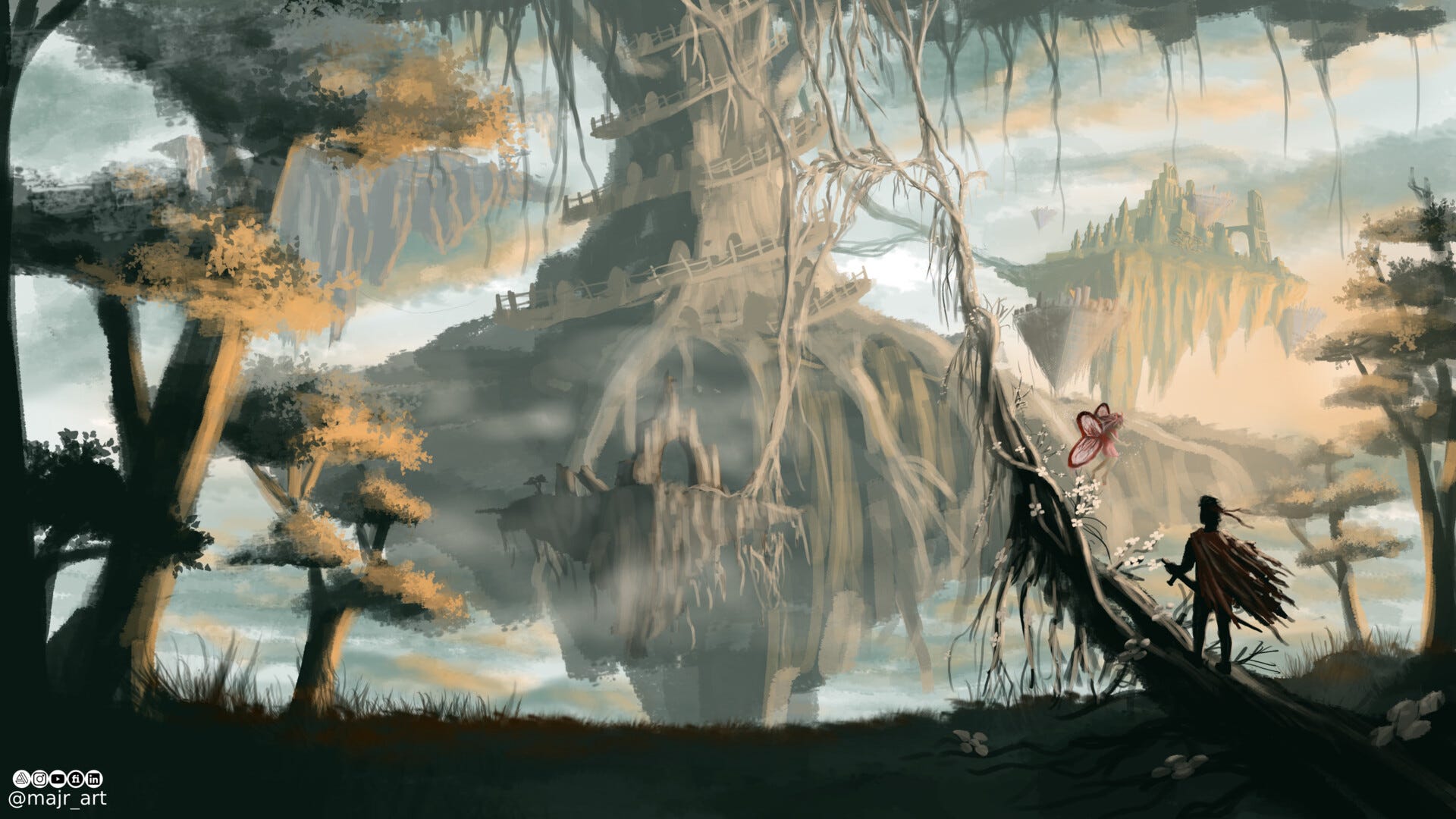
In Irish tradition, there are stories of the gods “moving in the mist” or moving invisibly through us and through our world. There is a story where a king was fighting rather remarkably, and a soldier in his retinue turned to the Druid and asked how such feats were possible. They replied that the Dagda was working through the king to pass judgement. The soldier then asked how they knew, to which they replied that they could see the god working through the king but such things are invisible to the untrained human eye. The Druid didn’t mean they literally saw the god Dagda manifest in the king’s body, instead they used the “science” at that time such as fortune telling and induced visions, to discern the actions taken by the king; therefore, they were able to “see” the god’s actions through the king. The Dagda is playing the role of the “cosmic order” enacting the outcome rather than being the cause of the outcome itself. A modern word that fits the role of the Dagda in the given example would be luck. Luck exemplifies random outcomes. In other words, it’s impossible for you to guess the lottery numbers tomorrow or the specific number in a random number generator, just like how it would be nearly impossible to guess the outcome of a battle. To the Celts, the Dagda was the explanation for random outcomes. There is a similar example to this for the Catholic Christian in one of the Bible stories they read where Balor uses his mighty eye to cause crop failure and sickness; this doesn’t mean that a literal eye simply looked at a crop and caused failure or at a human to cause sickness. Instead Balor's power or magic was the start of the sickness and crop failure, and what is meant to be read as an allegory or metaphor gets mistakenly interpreted literally. It is important to remember that the stories were made for people who do not have a modern understanding of science in the world around us, and things like metaphors or allegories were needed in order to help them understand the morality of the story. For people who say things like “ Why didn’t the ancient Greeks just climb Mount Olympus and realize that there were no gods there?”, they are not getting the point. The ancient Greeks didn’t literally think that the gods existed on a specific mountain somewhere in Greece; instead, the allegory of Mount Olympus was to show people an example of where the gods might live. In other words, Mount Olympus was used to show that the gods live somewhere beyond us and what we are capable of seeing. The role of the priest or druid was to attempt to interpret and understand the gods. When they thought they reached that goal, it was then their job to teach everyone else about them and explain that the gods just want us to live properly.
The Druids were very vague with their description of the otherworld. Some people describe it as a land of eternal youth, beauty, health, joy and abundance. The path to getting to this world varied wildly in the texts shared. Some say that you must travel through dark caves and tunnels while others say you have to travel far to the west across the ocean hoping to see an island covered in mist which was the destination. Maybe you are thinking that these sound dangerous, but taking these descriptions literally is the real danger here. It’s important to remember that these instructions were more than likely motifs used to describe where the gods and the dead exist; therefore, the stories that offer the best description for a modern understanding are the ones describing the Otherworld as another dimension. Regardless of where it was and what people had to do to get there, the universal trait of the Otherworld was essentially a paradise where time moves differently than in our current world. It is also free of pain and suffering and is said to have lush forests, meadows and crystal clear water. The sun constantly whines in the sky, causing the flowers to forever bloom with their vibrant colors. The Otherworld is the perfect definition of a utopia. Unlike Valhalla and Mount Olympus, humans could enter the Otherworld; however they could not do it alone. Tales vary with how humans would get there, but those who were deemed worthy by the fairies and the gods could enter. It was even possible to simply be invited by the fairies or the gods. Ancient burial mounds would sometimes serve as entryways; sources of water would be used to enter as well. I reject the idea that humans could enter the Otherworld simply with their own will, and I do not believe the myths represent that conclusion either. Yes, entries to the Otherworld in the cycles are on earth, but they were hidden or protected by magic. There is always some supernatural event when humans are transported to the Otherworld which can only be done by the fairies or the gods. In other words, one cannot not simply walk into it. Although this place is commonly referred to as “The Otherworld” in the Irish mythological cycles, it has many other names such as Tír na nÓg (Land of Youth), Tír Tairngire (Land of Promise), Tír fo Thuinn (Land under the waves) and so on.
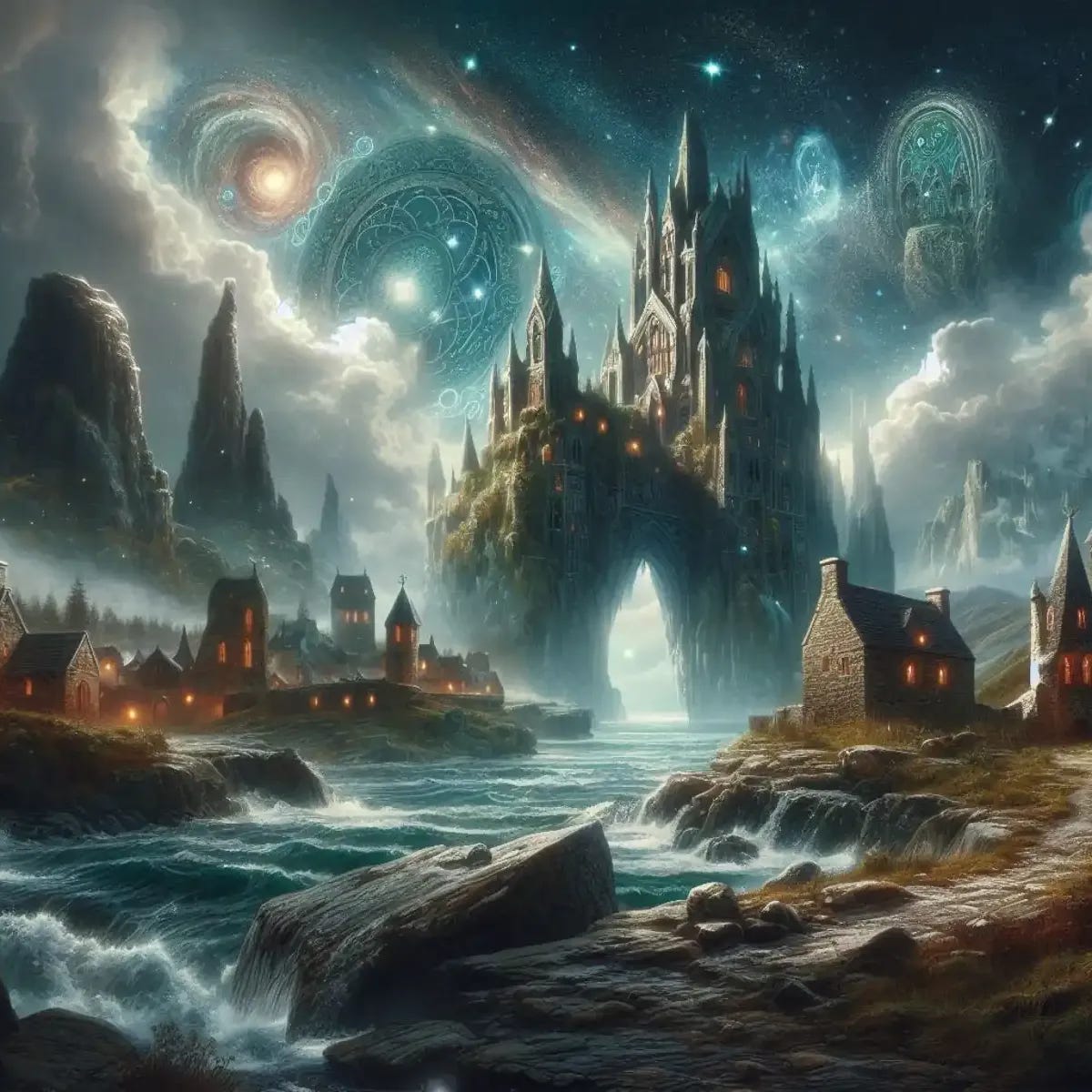
As stated before, the Otherworld serves as a plain of existence for the gods, fairies and the dead. An Irish mythological story involving the Otherworld is the story of Oisín and Niamh. In the story, Niamh is described as a fairy queen with golden hair who falls in love with Oisín and invites him to the “Land of Eternal Youth.” Riding her magical white horse, they journey together to Tír na nÓg, a paradise where time stands still and inhabitants remain young and joyful forever. There, Oisín and Niamh get married and have three children. However, after what feels like a few years but is actually 300 years in the mortal world, Oisín becomes homesick and wishes to visit Ireland. Niamh reluctantly allows him to go but warns him not to touch the ground, as doing so will break the spell keeping him youthful. Tragically, while helping some men lift a heavy stone in Ireland, Oisín falls from his horse and touches the earth. He instantly ages into an old man and is unable to return to Tír na nÓg.